

Why Do I Love My Partner But Don’t Want to Have Sex With Them?
If you find yourself lying in bed, looking at the person you love most in the world, and wondering, “Why do I love my partner but don’t want to have sex with them?” …please take a deep breath. Experiencing low desire does not mean you are broken, nor does it mean your relationship is failing. So often, we compare our sex lives to unrealistic pop-culture ideals, scroll past filtered highlights on social media, or get bogged down by stress, communication breakdowns, body changes, and major life transitions.
Here is the most important thing to hold onto: you know you love your partner. That love is the golden thread that leads back to intimacy. If the love is there, you already have a solid, beautiful foundation to intentionally rebuild your erotic connection.

Step 1: WHAT Are You Low Desire For?
When we say “I have low desire,” we tend to treat it as a blanket statement. But desire is rarely all-or-nothing. If you feel a wall go up when sex is brought up, ask yourself: What, specifically, am I low desire for right now?
- Is it low desire for sex being initiated at 10:30 PM when you are already completely exhausted?
- Is it low desire for being surprised with sex when your brain is still in “work mode”?
- Is it low desire for the same predictable, routine sex?
- Is it low desire for sex that is uncomfortable or physically painful?
Once you unpack what you are resisting, you uncover crucial clues. You aren’t resisting your partner—you might just be resisting the timing, the style, or the physical discomfort.
Step 2: WHAT DO You Have Desire For?
Once you identify what you don’t want, turn your curiosity toward what actually feels inviting. What turns your nervous system “on” or helps you feel open?
- A different style of sex? (e.g., slower touch, quickies, or shifting power dynamics)
- More intentional planning vs. spontaneity? (Sometimes scheduling sex allows the brain time to anticipate it!)
- A specific fantasy? Is there something you’ve been mulling over in private but felt too nervous to name aloud?
- Non-sexual physical pleasure? Maybe your system has low desire for genital contact right now, but high desire for a long foot massage and being fed dark chocolate at the end of a hard day.
Erotic connection often starts far away from the bedroom. Giving yourself permission to crave non-sexual physical pleasure is often the bridge back to sexual desire.
Step 3: Tuning Into Your Body’s Signals
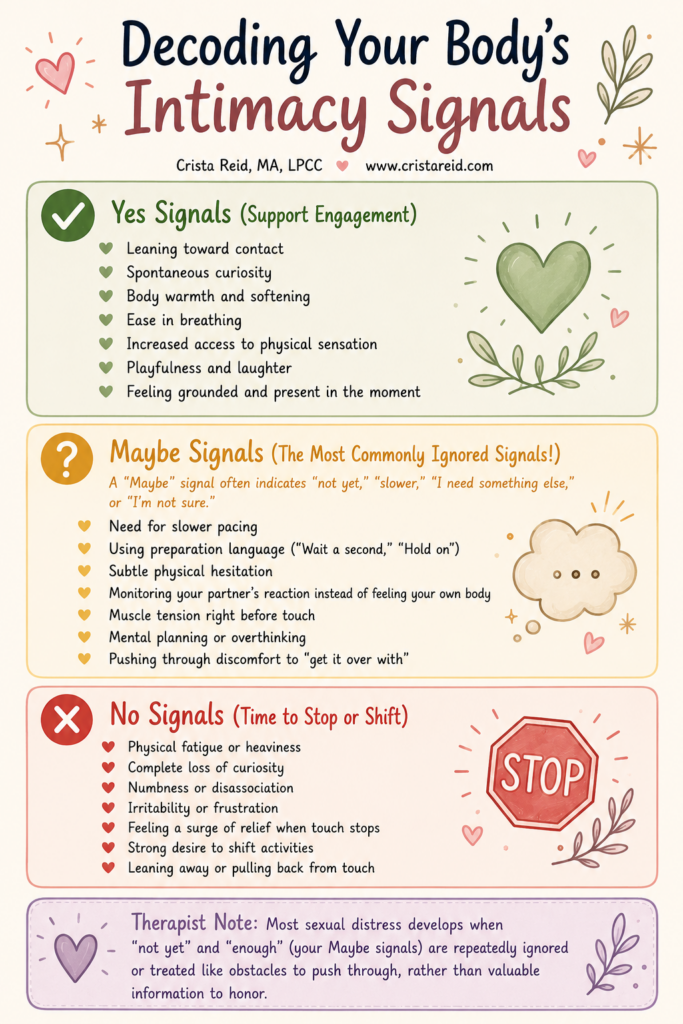
To rebuild sexual trust with yourself and your partner, you need to learn your body’s unique language. Your nervous system gives you constant feedback during touch and intimacy through Yes, Maybe, and No signals.
Step 4: Check for External Factors
Desire doesn’t exist in a vacuum. Before blaming your relationship, take inventory of what you are putting into your body. Several common medications can significantly dampen libido and arousal, including:
- External stress: Financial worries, job loss, or high-pressure work environments.
- Grief and bereavement: Coping with the death of a loved one or major life losses.
- Trauma and history of abuse: Past emotional, physical, or sexual mistreatment that creates a mental block against intimacy.
- Cultural or religious guilt: Strict upbringing or negative social messages regarding sex
- Relationship conflict: Unresolved arguments, anger, or emotional distance with a partner.
- Poor communication: Feeling unheard, unvalued, or misunderstood by an intimate partner.
- Caregiver burden: Strains from parenting, looking after aging parents, or uneven household labor.
- Loss of trust: Infidelity, dishonesty, or emotional safety breaches within the partnership
- Medications that can impact libido and desire: SSRIs and SNRIs (Antidepressants), anti-psychotics and mood stabilizers, hormonal birth control (Pills, IUDs, implants)
If you suspect your medication is impacting your desire, speak with your prescribing doctor. There are often alternative options or supportive strategies available.
Step 5: Incorporate Novelty & Support Tools
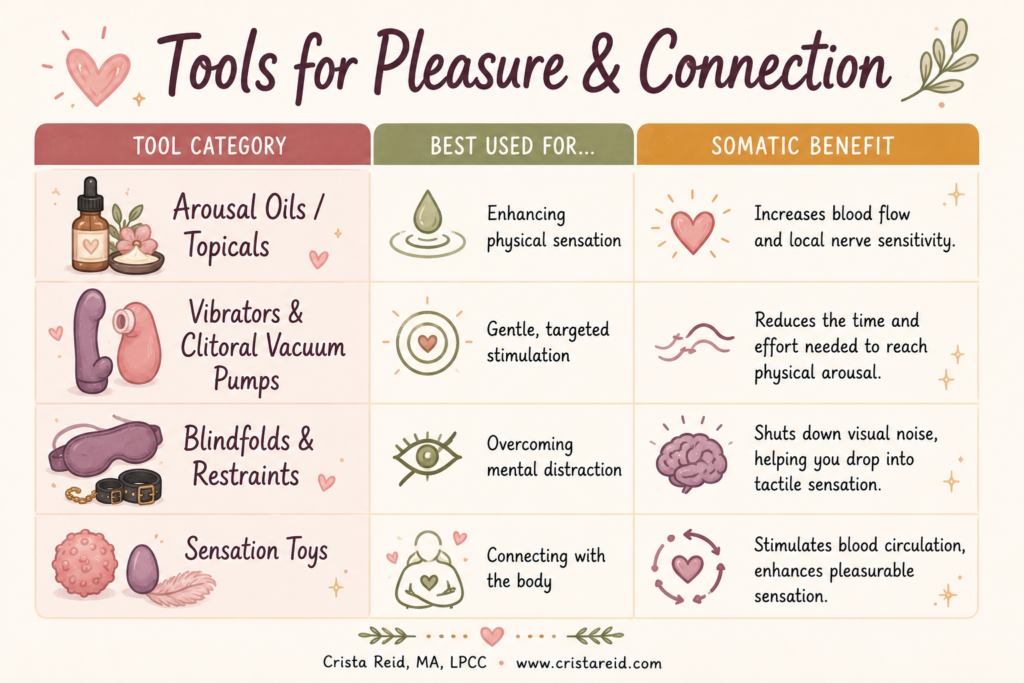
When you are ready to experiment with rebuilding pleasure, introducing tools can take the pressure off “performing” and help your body access arousal more easily:
- Arousal Oils: Topical botanical oils that increase localized blood flow and sensation.
- Vibrators & Clitoral Pumps: Tools designed to support blood flow and make arousal feel effortless.
- Toys for Other Erogenous Zones: Feather ticklers, temperature play tools, or massage wands that focus on the whole body rather than just genitals.
- BDSM or Sensory Gear: Blindfolds, light restraints, or impact toys to help quiet a busy mind and shift you out of “overthinking mode.”
Love is Your Compass
If you love your partner, you are not at a dead end—you are simply at a turning point. Rebuilding desire isn’t about forcing yourself to want sex as it used to be. It’s about listening to your body’s signals, removing the pressure, and discovering what intimacy looks like for who you are today.
Ready to Reconnect With Your Desire?
Navigating low desire can feel lonely, but you don’t have to figure it out by yourself. Through somatic sex therapy, we can map out your unique “Maybe” signals, release performance pressure, and help you and your partner rebuild a pleasure-filled connection.